You built the portal. It looks great. It solves real problems. And your customers are still emailing you like it doesn’t exist.
Portal adoption is the gap between “we have a portal” and “our customers actually use our portal.” Closing that gap is the difference between a smart investment and an expensive login page nobody visits.
Why Customers Don’t Use Portals
Before fixing adoption, understand why it’s low:
- They don’t know it exists — You’d be surprised how often this is the root cause. A single announcement email isn’t enough.
- They don’t see the benefit — “We have a portal” means nothing to customers. “View your invoices, track your projects, and message us — all in one place” means something.
- It’s too hard to access — Complex login processes, forgotten passwords, and confusing navigation kill adoption.
- Their existing method works — Email and phone are familiar. If the portal doesn’t offer a clearly better experience, customers will stick with what they know.
- It’s not useful enough — If the portal only does one minor thing, there’s not enough reason to log in regularly.
Strategies for Driving Adoption
1. Make the portal the default channel
Stop offering alternatives for things the portal handles. When a client emails asking for an invoice, don’t send the invoice by email — send a link to the portal where they can download it. When they call for a status update, walk them through checking it in the portal.
This sounds harsh, but it’s the most effective adoption driver. If the portal is optional, it will be optionally ignored.
2. Nail the first visit
The onboarding experience sets the tone. When a customer first logs into the portal, they should immediately see:
- What the portal offers
- Something valuable (their documents, project status, account info)
- A clear next action
If the first visit shows an empty dashboard with no guidance, they won’t come back.
3. Send useful notifications
Use email notifications to pull customers into the portal: “Your monthly report is ready — view it in your portal.” “A new document has been shared — download it here.” “Your support ticket has been updated — check the response.”
Every notification should include a direct link to the relevant content. Reduce clicks between notification and value.
4. Communicate the benefits clearly
Don’t just announce the portal — sell it. Specific benefits resonate more than generic features:
- “Access your tax documents anytime — no more waiting for us to email them”
- “Track your project progress 24/7 — see exactly where things stand”
- “Pay invoices in two clicks — no more mailing checks”
- “Get answers instantly from our help center — no waiting for a callback”
5. Reduce login friction
Every login barrier costs adoption:
- Support SSO so customers don’t need another password
- Offer “stay logged in” for returning users
- Implement password-less login (magic links) for low-security portals
- Make the portal mobile-friendly (many customers will access from their phone)
6. Make it genuinely useful
The portal needs to offer enough value that customers want to check it. A portal that only lets you view invoices won’t drive regular engagement. A portal with invoices, documents, project tracking, messaging, and a knowledge base gives customers multiple reasons to log in.
7. Train your team
Your team needs to champion the portal. If your support staff answers questions by email instead of directing customers to the portal, adoption will stay low. Make portal-first communication a team standard.
Measuring Adoption
Track these metrics:
- Portal activation rate — What percentage of customers have logged in at least once?
- Monthly active users — What percentage log in at least once a month?
- Feature usage — Which portal features are used most and least?
- Channel shift — Is email/phone volume decreasing as portal usage increases?
Set targets for each and review them regularly.
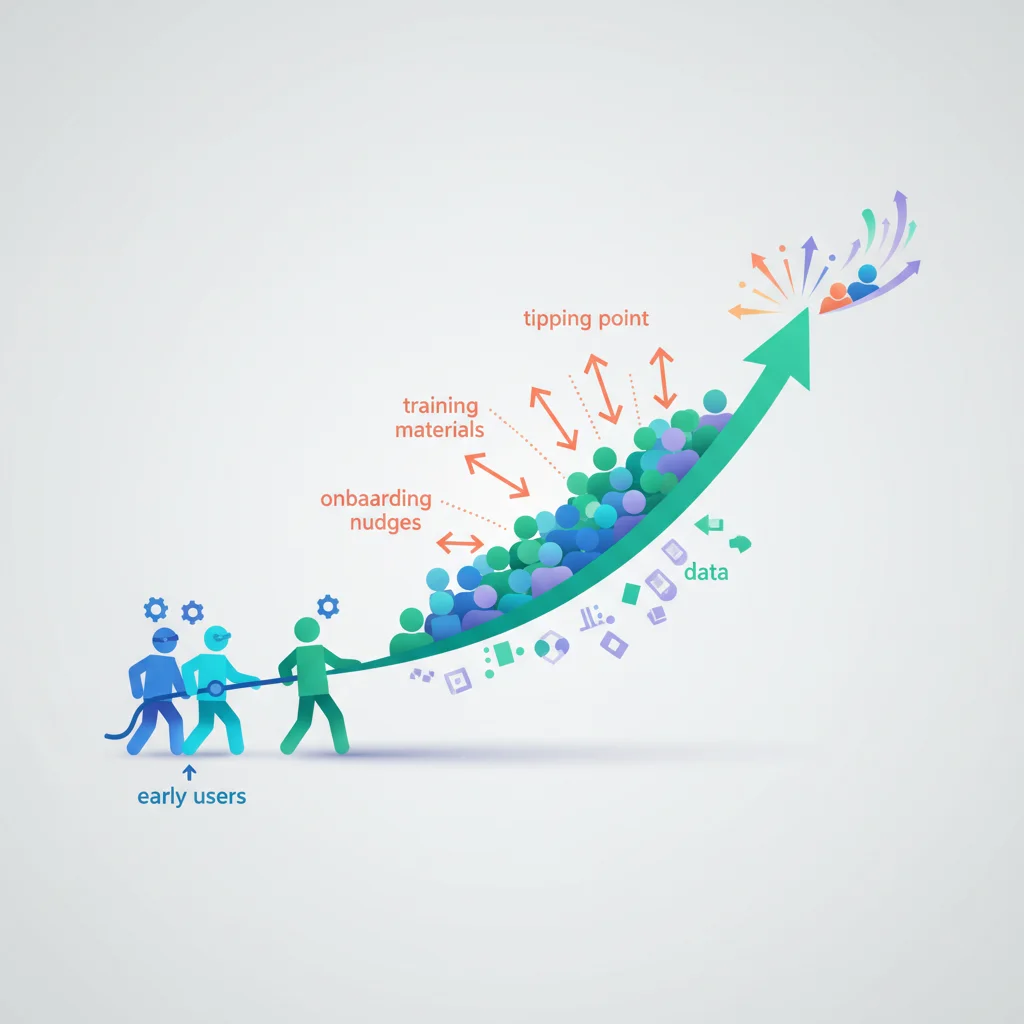
The Adoption Curve
Expect adoption to follow a pattern:
- Early adopters (first month) — 20-30% of customers try the portal
- Growth phase (months 2-6) — Consistent communication and channel redirection increase adoption to 50-70%
- Maturity (6+ months) — Portal becomes the default for most interactions, with email/phone reserved for exceptions
The key is persistence. Most businesses give up on adoption too early, reverting to email because “customers prefer it.” What customers prefer is the path of least resistance — make the portal that path.