
Your front desk shouldn’t spend half the day answering “can I get my lab results?” calls. Patients expect digital access to their health information — and regulations like the 21st Century Cures Act now require it.
A patient portal gives patients self-service access to records, appointments, prescriptions, and secure messaging with their care team. It’s no longer a nice-to-have. It’s the baseline.
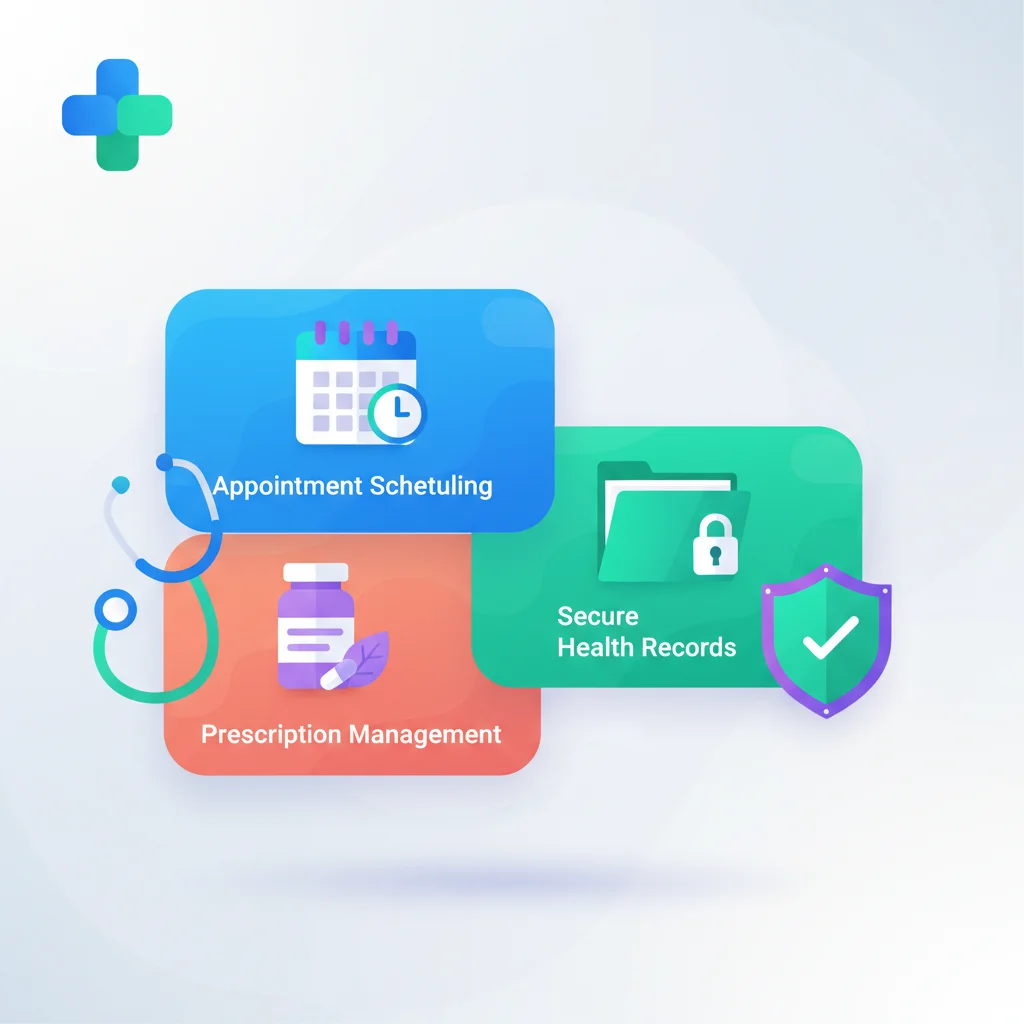
Problems a Patient Portal Solves
Administrative phone call overload
Healthcare front offices are overwhelmed with calls. Appointment scheduling, prescription refill requests, billing questions, lab result inquiries — each takes time and creates wait times for everyone. A patient portal moves routine tasks to self-service, freeing staff for higher-value work.
Patients demanding access to their records
Patients have a legal right to access their health information, and they increasingly expect it to be available digitally. The ONC Information Blocking Rule makes it a requirement for healthcare providers to provide patients with electronic access to their health information without unnecessary delay.
Care coordination gaps
When patients see multiple providers, information gaps are common. A portal that gives patients access to their complete health record — labs, imaging, visit summaries, medications — empowers them to share relevant information across their care team.
Billing confusion and bad debt
Healthcare billing is notoriously complex. A portal that clearly shows charges, insurance adjustments, patient responsibility, and payment options reduces confusion and improves collection rates.
Key Features for Healthcare Portals
- Personal health records (PHR) — Patients view lab results, medication lists, allergies, immunization records, and visit summaries.
- Appointment scheduling — Patients book, reschedule, and cancel appointments online. Pre-visit questionnaires can be completed in advance.
- Secure messaging — HIPAA-compliant communication between patients and providers, replacing phone tag with asynchronous messaging.
- Prescription management — Patients request refills and view their medication history.
- Billing and payments — Clear presentation of charges, insurance processing, and online payment options.
- Telehealth integration — Video visits launched directly from the portal.
- Health education resources — Personalized educational materials based on the patient’s conditions.
- Proxy access — Parents can manage their children’s accounts; caregivers can manage elderly patients’ access.
Compliance Requirements
Healthcare portals operate in one of the most regulated environments:
- HIPAA — The Health Insurance Portability and Accountability Act requires administrative, physical, and technical safeguards for protected health information (PHI). Any patient portal must implement encryption, access controls, audit logging, and breach notification procedures.
- 21st Century Cures Act — Requires providers to give patients electronic access to their health information and prohibits information blocking.
- State privacy laws — Some states have additional requirements (e.g., California’s CMIA, New York’s SHIELD Act).
- HITRUST — While not legally required, HITRUST certification is increasingly expected by healthcare organizations and their technology partners.
Any portal handling patient data must undergo a thorough security assessment and maintain compliance documentation.
Patient Portal Software in Healthcare
The healthcare portal market has established players and is tightly integrated with Electronic Health Record (EHR) systems:
- Epic MyChart — The dominant patient portal in the US, used by most large health systems. Integrated directly with the Epic EHR.
- Cerner Patient Portal — Now part of Oracle Health, integrated with the Cerner EHR.
- athenahealth — Cloud-based EHR with a patient-facing portal (athenaPatient) for scheduling, messaging, and records.
- Phreesia — Patient intake and engagement platform that connects with most EHR systems.
- Klara — Patient communication platform focused on messaging, scheduling, and forms.
For smaller practices, platforms like SimplePractice and Practice Fusion offer EHR functionality with built-in patient portals.
How Portals Improve Patient Outcomes
Research consistently shows that patient portal engagement correlates with better health outcomes. A study in JAMIA found that patients who actively use portals have better medication adherence, more preventive screenings, and higher satisfaction with their care.
The key is adoption. Portals that are easy to use, mobile-friendly, and provide genuinely useful information see higher engagement. Portals that are difficult to navigate or only show limited data tend to be abandoned. See our article on getting customers to use your portal for strategies that apply to healthcare settings.
What a Patient Portal Looks Like in Practice
Here’s what a modern patient portal experience actually feels like: You get blood work done at 9am during a routine checkup. By mid-afternoon, your phone buzzes with a notification — results are ready. You open the portal, and there are your cholesterol numbers, clearly laid out with color-coded normal and abnormal ranges highlighted. Below the numbers, your doctor has left a brief note: “Cholesterol slightly elevated — let’s discuss diet changes at your next visit.” You tap the message button and fire off a quick question asking whether you should start any lifestyle changes now. No phone call, no waiting three days for a letter, no wondering if the lab lost your samples. That’s the bar patients expect now.
Epic MyChart is the portal most patients encounter, especially if they visit any large health system. With over 200 million patient accounts, MyChart has become the de facto standard for how Americans interact with their healthcare providers digitally. Patients use it to review test results, message their doctors, schedule appointments, request prescription refills, and even share their records across different health systems. It’s not perfect — the interface can feel clinical and overwhelming — but its ubiquity means most patients have at least some familiarity with portal-based healthcare.
On the other end of the spectrum, SimplePractice has carved out a strong niche among therapists, psychologists, and small mental health practices. For a solo therapist or a small group practice, SimplePractice handles the entire client lifecycle through one portal: clients complete intake paperwork, sign consent documents, join telehealth sessions, and pay for appointments all in one place. What makes it especially valued in mental health is the thoughtful way it handles sensitive documentation — session notes, treatment plans, and diagnoses are managed with the privacy controls that mental health clients expect and deserve.
It’s worth noting that many smaller independent practices — family doctors, specialists, small clinics — find that their EHR’s built-in patient portal leaves a lot to be desired. The portal might technically exist, but it’s clunky, confusing, or missing basic features patients want. That’s where third-party tools like Klara and Phreesia come in. They layer a much better patient experience on top of the existing EHR, handling things like two-way messaging, appointment reminders, intake forms, and check-in workflows. For practices that can’t switch their EHR but want to dramatically improve what patients actually see and use, these add-on platforms can be transformative.