
“Where’s my shipment?” might be the most expensive question in logistics. Every time a customer calls to ask it, your team stops what they’re doing to play human tracking number. Multiply that by dozens of shipments a day and you’ve got a full-time job that shouldn’t exist.
A customer portal for logistics answers those questions automatically — real-time tracking, document access, and self-service quoting — so your team can focus on moving freight, not fielding status calls.
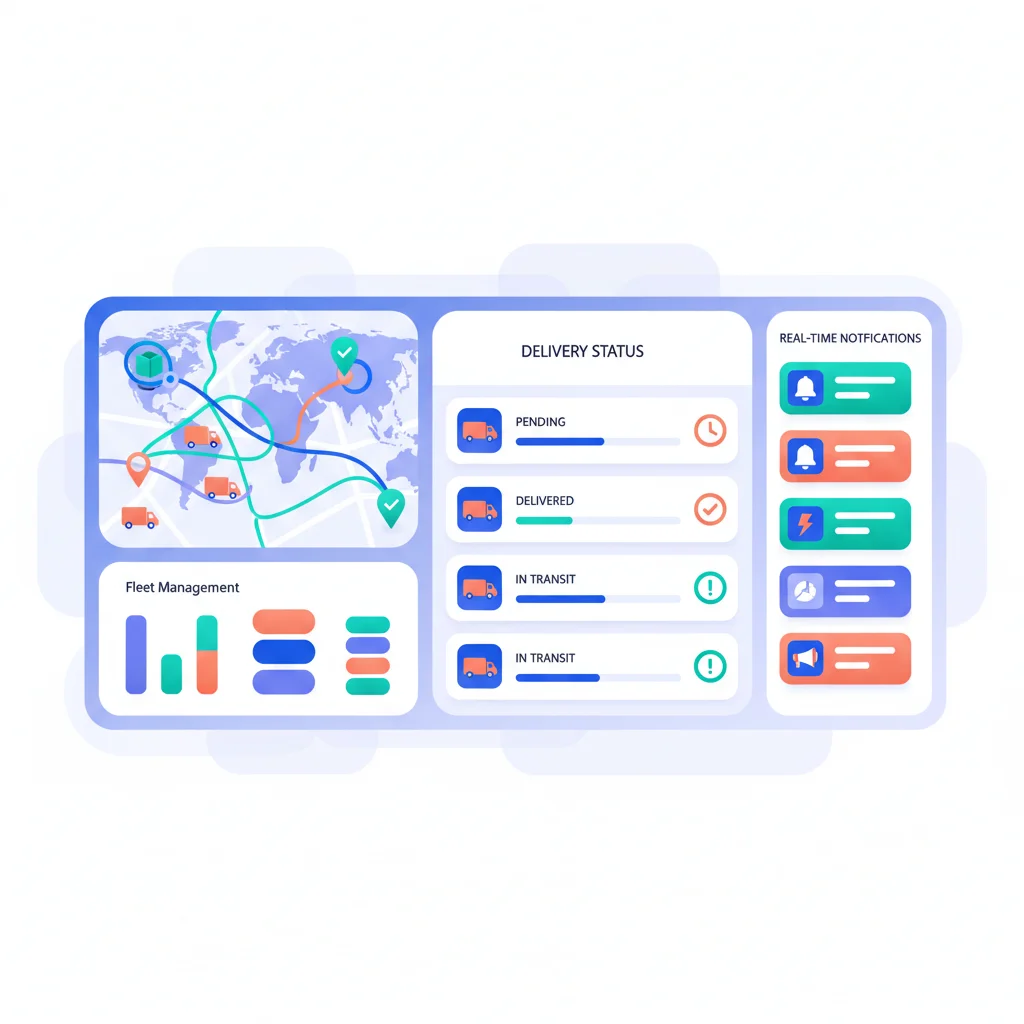
Problems a Customer Portal Solves
”Where’s my shipment?” calls
Shipment tracking inquiries are the single largest source of customer contact in logistics. A portal with real-time tracking — integrated with your TMS (Transportation Management System) and carrier feeds — lets customers check status themselves.
Document retrieval requests
Bills of lading, proof of delivery, customs documents, invoices, and freight bills are constantly requested by customers. A portal with a document library organized by shipment gives customers instant access.
Manual quote and booking processes
Many logistics companies still handle quotes by phone or email. A portal with self-service quoting and booking streamlines this process and captures business that might be lost during off-hours.
Billing and invoice disputes
When customers can’t easily see what they’re being charged for, disputes follow. A portal with transparent billing — showing each charge tied to a specific shipment — reduces disputes and accelerates payment.
Key Features for Logistics Portals
- Real-time shipment tracking — GPS tracking, status updates, and estimated delivery times for all active shipments.
- Booking and quoting — Self-service rate quotes and shipment booking with origin, destination, and cargo details.
- Document management — BOLs, PODs, customs paperwork, invoices, and certificates organized by shipment.
- Invoice and payment management — View and pay freight invoices, see charge breakdowns, and manage payment terms.
- Reporting and analytics — Shipping volume, on-time performance, spend analysis, and lane-level data.
- Claims management — File and track freight claims for damaged or lost shipments.
- Address book — Save frequently used shipping and receiving locations for quick booking.
Logistics Portal Software
- project44 — Supply chain visibility platform with customer-facing tracking capabilities.
- FourKites — Real-time supply chain visibility with shipper and carrier portals.
- Descartes — Logistics technology platform with customer portals for tracking and documentation.
- Turvo — Logistics collaboration platform with customer, carrier, and partner portals.
- Körber TMS — Transportation management system (formerly MercuryGate) with customer portal for shipment visibility.
What a Logistics Portal Looks Like in Practice
Here’s a day in the life: a warehouse manager at a mid-size retailer logs into their 3PL’s portal at 7am with a cup of coffee. Right away, they see three active shipments on a map. One is in transit from the West Coast, arriving tomorrow. One is sitting at customs in Chicago — the portal shows it cleared the first checkpoint and is awaiting final review. The third was delivered overnight, and the proof of delivery (POD) is already uploaded with a signature and timestamp. They download the bill of lading (BOL) for the customs shipment to send to their compliance team, check the freight invoice breakdown for last week’s deliveries, and submit a quote request for next week’s LTL shipment to Dallas. All before that first coffee is finished.
That kind of visibility used to require a chain of phone calls — call the carrier, call the broker, call the warehouse. Now it’s a single screen. project44 is one of the platforms making this possible at scale. It’s a supply chain visibility platform used by both shippers and logistics providers to give their customers real-time tracking across multiple carriers. Customers see their shipments on a live map with ETA predictions that update dynamically based on actual transit data, plus exception alerts when something goes off-plan — a weather delay, a missed pickup, a customs hold. Instead of finding out about a problem when the delivery doesn’t show up, customers know about it hours or days in advance.
Turvo takes a slightly different angle as a logistics collaboration platform. Rather than just showing tracking data, Turvo creates a shared workspace where shippers, carriers, and brokers all see the same real-time view of every shipment. It’s especially popular among mid-size freight brokers and 3PLs who need their customers, carriers, and internal teams all working from the same information. When a customer logs into a Turvo-powered portal, they’re not just passively watching dots move on a map — they can communicate with their broker, approve rate confirmations, and manage exceptions, all within the same interface.
For smaller freight brokers and trucking companies that don’t need a full visibility platform, the reality is more practical. Many use the customer-facing portal built into their TMS (Transportation Management System) — platforms like Rose Rocket or Tai TMS include basic customer portals where shippers can track loads, access documents, and view invoices. Some smaller operators even get by with shared tracking dashboards or simple document-sharing portals. The key isn’t which platform you use — it’s whether your customers can answer “where’s my shipment?” without picking up the phone.