
Nothing kills a new client’s excitement faster than “please check your email for the forms we sent.” Scattered emails, missing documents, unclear next steps — that’s not onboarding. That’s a trust-eroding obstacle course.
A customer portal turns your onboarding into a guided, self-service experience. Clients see exactly what’s needed, complete steps at their own pace, and never wonder “what happens next?” Your team stops chasing paperwork and starts delivering value from day one.
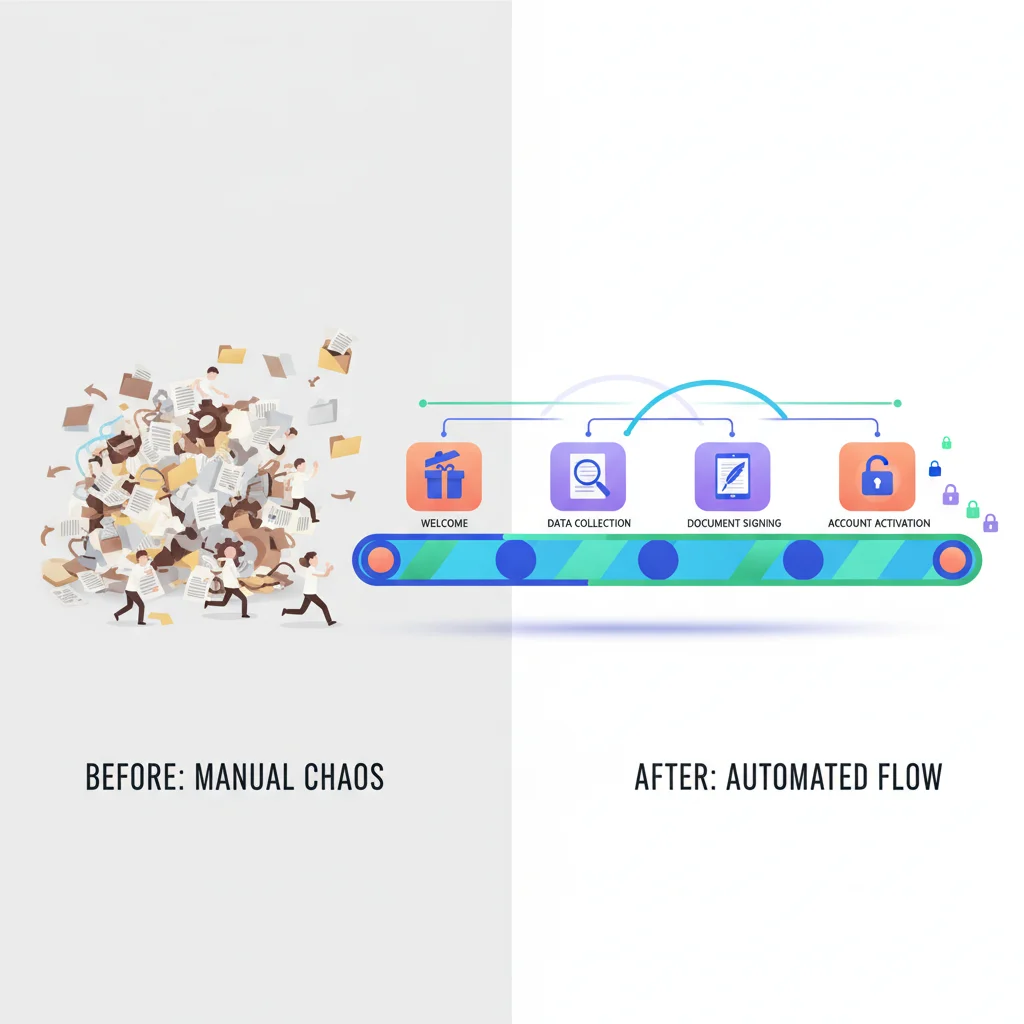
The Cost of Poor Onboarding
Poor onboarding has measurable consequences:
- 86% of customers say they’d be more likely to stay loyal to a business that invests in onboarding (Wyzowl)
- Early-stage churn (customers leaving within the first 90 days) is often the highest-churn period and is most influenced by the onboarding experience
- Time-to-value — How quickly customers start getting benefit from your service directly impacts satisfaction and retention
For service businesses, onboarding also represents a significant internal cost. Accounting firms may spend weeks collecting documents from new clients. Agencies spend days gathering brand assets, logins, and goals. Consulting firms invest time in stakeholder interviews and information gathering.
A portal with structured onboarding features compresses all of this.
What Portal-Based Onboarding Looks Like
For the customer
- They receive a portal invitation
- They log in and see a clear welcome screen with their onboarding checklist
- Each step is explained: what’s needed, why, and how to provide it
- They complete steps at their own pace — uploading documents, filling out forms, signing agreements
- Progress is visible: 4 of 7 steps complete
- They receive reminders for incomplete steps
For your team
- The portal shows all new clients and their onboarding status
- When a client completes a step, the relevant team member is notified
- Blockers are visible: which clients are stuck, and where?
- Templates ensure consistent onboarding regardless of which team member manages it
- Time-to-onboard is tracked and can be optimized
Benefits
- 2-3x faster onboarding compared to email-based processes
- Fewer dropped steps — Nothing falls through the cracks when there’s a checklist
- Better first impression — Clients start the relationship seeing your professionalism
- Scalable — The same onboarding process works for your 10th client and your 500th
- Data quality — Structured forms collect complete, properly formatted information the first time