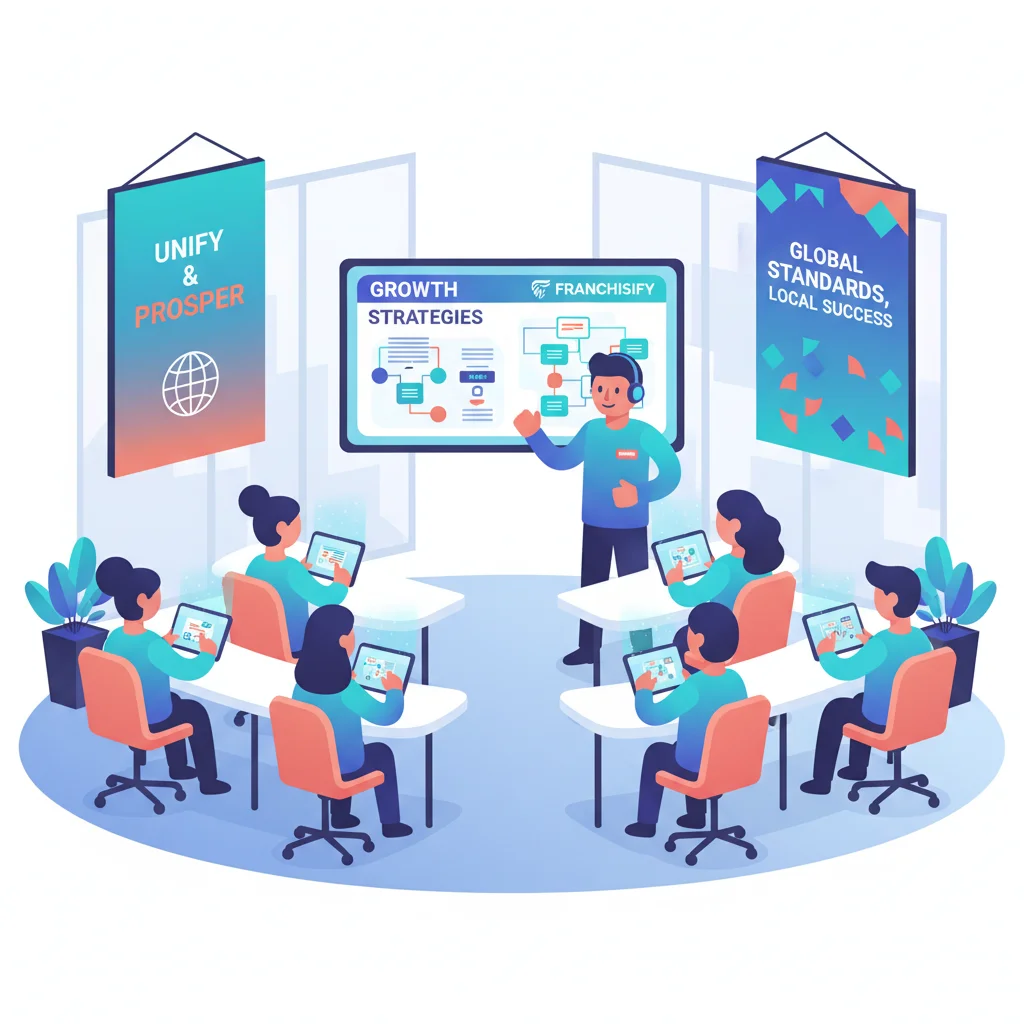
Fifty locations, one brand standard — and somehow everyone’s using a different version of the logo. When your franchise network runs on email chains and shared drives, inconsistency isn’t a risk. It’s a guarantee.
A franchise portal gives every franchisee a single hub for brand assets, operations manuals, training, performance data, and communication. Everyone stays on the same page — literally. For a deeper look at how franchise networks use portals, see our franchise industry guide.
What Makes Franchise Portals Unique
Unlike a typical customer portal, franchise portals serve an internal business network. Franchisees are both customers (they pay franchise fees) and partners (they represent your brand). This dual relationship requires a portal that balances support with accountability.
Core Capabilities
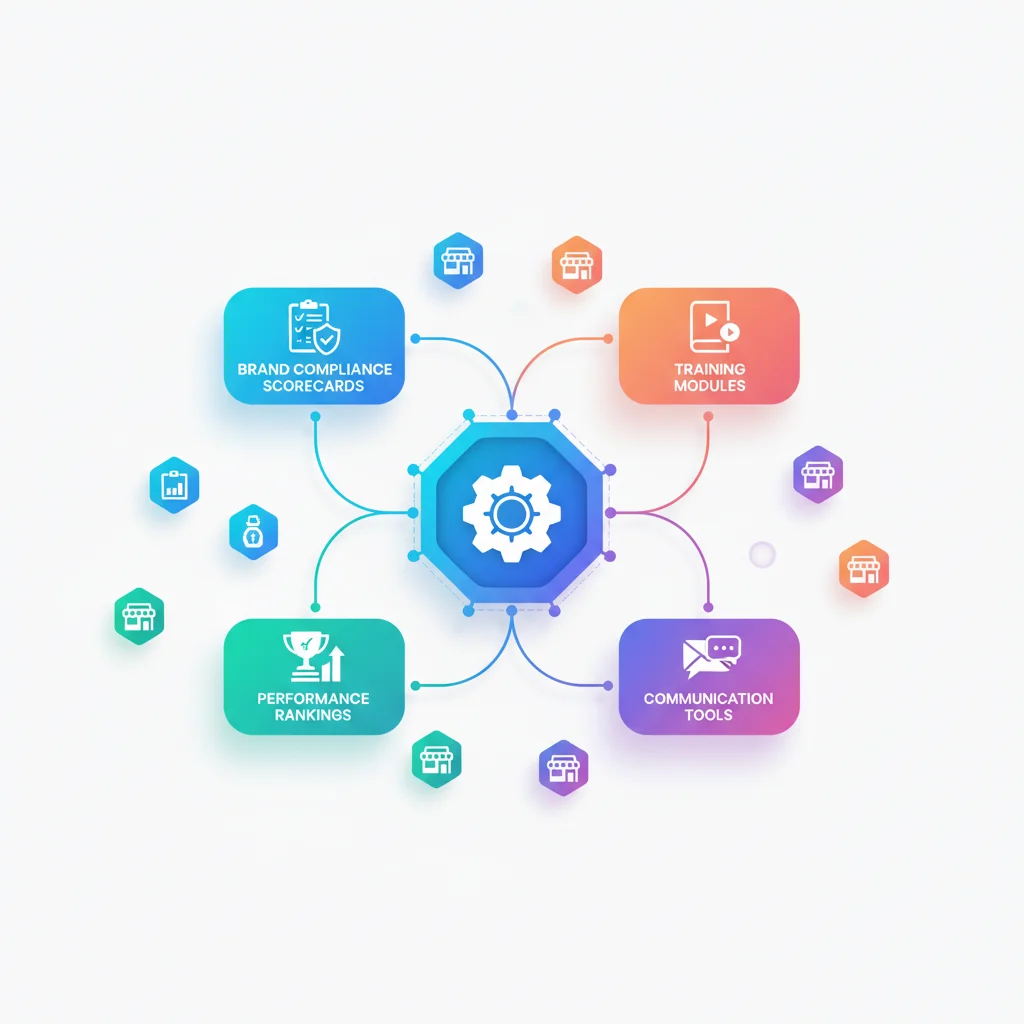
- Operations manual — Digital, searchable, always up-to-date. When procedures change, every franchisee has immediate access.
- Brand asset management — Logos, templates, signage specs, and marketing materials with version control to ensure consistency.
- Training and certification — Onboarding courses, ongoing training modules, and certification tracking for franchisee staff.
- Performance dashboards — Location-level KPIs including sales, customer satisfaction, and compliance scores.
- Communication — Announcements, newsletters, and messaging organized by region, cohort, or topic.
- Vendor and supply chain — Approved vendor lists, ordering links, and supply chain updates.
- Compliance and audits — Store inspection results, corrective action tracking, and compliance documentation.
- New franchisee onboarding — Structured workflows for getting new locations up and running.
Benefits for Franchise Systems
- Brand consistency — When every location has access to the same resources, consistency improves naturally.
- Faster onboarding — New franchisees get productive faster with structured, self-paced onboarding.
- Better communication — Important updates reach everyone, with read-receipt tracking.
- Data-driven management — Performance data helps identify which locations need support.
- Reduced HQ overhead — Self-service access to resources reduces calls and emails to corporate.